Why Do Outdoor Kitchen Drawers And Doors Fail Long Before The Grill Itself Does?
Storage is where outdoor kitchen budgets get quietly trimmed, and the result shows within a few seasons. Trapped water, mixed metals, and indoor grade hardware account for most of the failures owners blame on bad luck.
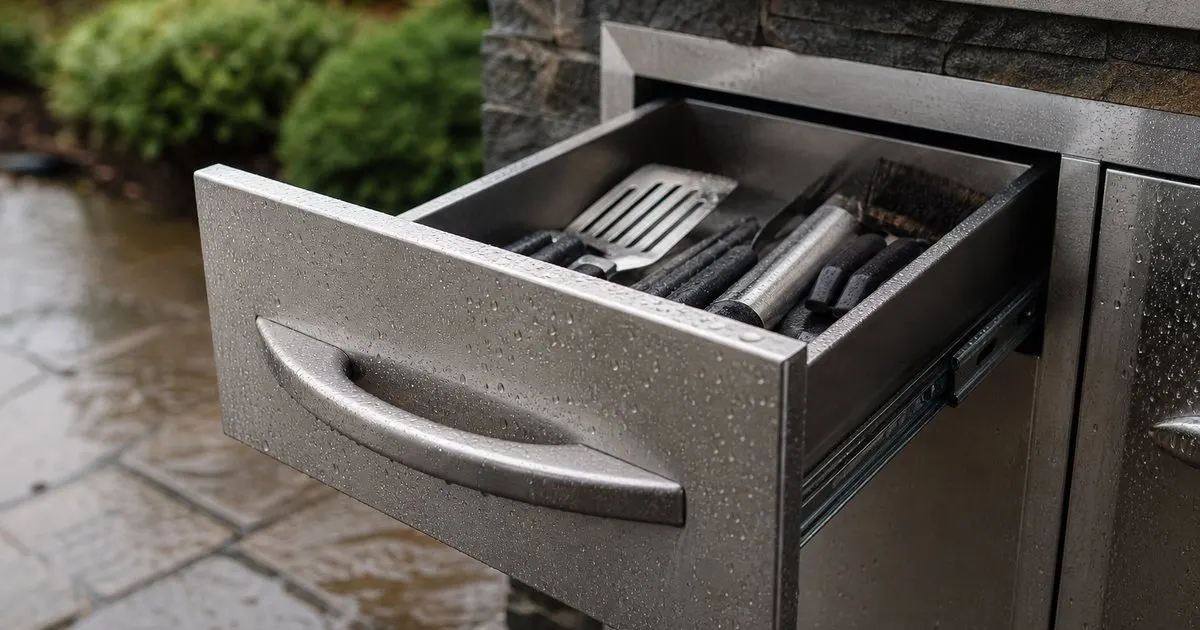
The Grill Is Engineered For Weather. The Storage Often Is Not
A serious grill head is designed as an outdoor appliance from the first sketch: heavy gauge metal, a hood that sheds water, burners meant to be rained on, and a manufacturer who expects the thing to live outside for a decade or more. The drawers and doors flanking it are frequently chosen last, from a different supplier, on the assumption that a stainless front is a stainless front. That assumption is the single most common source of disappointment in an otherwise well built outdoor kitchen, because the appliance keeps working beautifully while the storage around it stains, sticks, sags, and eventually will not close. Related: How Do You Plan A Luxury Outdoor Kitchen That Lasts For Years?
There is also a psychological reason cabinetry gets cut. By the time the structure, the counter, the utility runs, and the appliance package have been priced, storage looks like the one line that can absorb a reduction without anyone noticing at the reveal. It is invisible in a rendering and unglamorous in a quote. But cabinetry is the part of the kitchen the cook touches most often, several times per meal, and it is the part most exposed to standing water, because unlike the grill it has no hood over it and no burner drying it out. Related: When Does An Outdoor Kitchen Genuinely Need Ventilation And Safe Clearances?
Keep reading: How Do You Plan A Luxury Outdoor Kitchen That Lasts For Years?, What Materials Truly Survive Years Of Sun, Rain, And Winter Frost?, Which Grill Fuel Best Suits A High End Outdoor Cooking Space?. See how Emberkitchn helps you the design guide to luxury outdoor kitchens and grills.
Water Gets In. The Real Question Is Whether It Can Get Out
No outdoor cabinet is watertight in practice. Rain drives sideways, irrigation sprays the base, a hose gets used on the paving, and condensation forms inside a masonry cavity on the first cool night after a hot day. Well designed outdoor storage assumes all of this and gives the water somewhere to go: drainage holes in the bottom of each drawer pan, a sloped or vented cabinet floor, gaskets that shed rather than trap, and a base that stands slightly off the slab on adjustable feet rather than sitting in whatever puddle forms after a storm. Cabinets sealed tight with no drainage path are usually worse than cabinets that breathe.
The masonry cavity behind the doors deserves the same attention. A hollow block or framed island with no ventilation and no weep path becomes a damp box that quietly corrodes hardware from behind, where nobody inspects. If the island carries gas, that cavity needs proper ventilation for safety reasons anyway, which is a separate and non negotiable requirement. Ask your builder to show you, on the drawing, exactly where water entering the island will exit it. If nobody can answer that question, the drawers will answer it for you in about two winters.
Corrosion Rarely Starts Where You Are Looking
Stainless steel is a family of alloys, not a single material, and the differences matter enormously outdoors. The common architectural grade performs well in most inland settings. The higher molybdenum bearing grade generally offers better resistance where salt air, pool chemistry, or de icing salts are part of the environment, and it typically costs more for good reason. Coastal and poolside installations are where the cheaper specification shows first, usually as brown speckling that appears within a season and is often surface tea staining rather than structural failure, though it still looks wrong on a premium build. Related: Why Do So Many Outdoor Kitchens Disappoint Within A Few Seasons?
The failures that actually stop a drawer working almost never begin on the visible face. They begin at cut edges, welds, and fasteners, and above all at the junction of two different metals. A beautiful stainless drawer front hung on plated carbon steel slides, or fixed with mismatched screws, will corrode at those contact points while the face still looks perfect. Ball bearing slides intended for indoor cabinetry pack with grit and salt and seize. Hinges rated for a laundry room sag under a heavy insulated door. When you inspect a sample, open it, look underneath, and put your hand on the slide and the fastener heads, because that is where the money was either spent or saved.
Specifying Storage That Outlives The Appliance Package
Ask four questions of any cabinetry you are considering. What alloy or material is the box, not just the face? Are the frames fully welded or spot welded and folded? What are the slides and hinges made of, and are they rated for outdoor exposure? And where does water drain? Marine grade polymer and powder coated aluminum are legitimate premium alternatives to stainless, not compromises, particularly near salt water, and both avoid the galvanic problems that plague mixed metal assemblies. Whichever material you choose, insist that the visible hardware and the hidden hardware come from the same specification.
Two practical details separate a kitchen that ages well from one that ages badly. First, build in access: a removable panel or a dedicated access door at every gas connection, water line, and junction box, so a future service call does not require breaking stone. Second, ask what happens in year eight when a slide fails. A supplier who stocks replacement slides, gaskets, and hinges for older lines is worth paying more for than one selling a slightly handsomer front today. Storage typically absorbs a larger share of a premium outdoor kitchen budget than owners expect, and it is the share that most reliably repays the spending. Related: What Materials Truly Survive Years Of Sun, Rain, And Winter Frost?
- Cabinetry, not the grill, is usually the first component of a luxury outdoor kitchen to fail.
- Specify a drainage path: drawer pan holes, vented cabinet floors, and a base raised off the slab.
- Corrosion starts at welds, cut edges, fasteners, and mixed metal contact points, not on the visible face.
- Confirm the slides, hinges, and hidden hardware match the exterior specification, and that spare parts exist.

Julien Jimenez
Julien Jimenez is an independent software builder based in Paris. He designs, ships, and operates focused SaaS products for small businesses and independent professionals. Read the full author page.
A Kitchen Beneath Open Sky
The design guide to luxury outdoor kitchens and grills. Emberkitchn is built to help you put this into practice.
Design your kitchenMore from the Emberkitchn blog
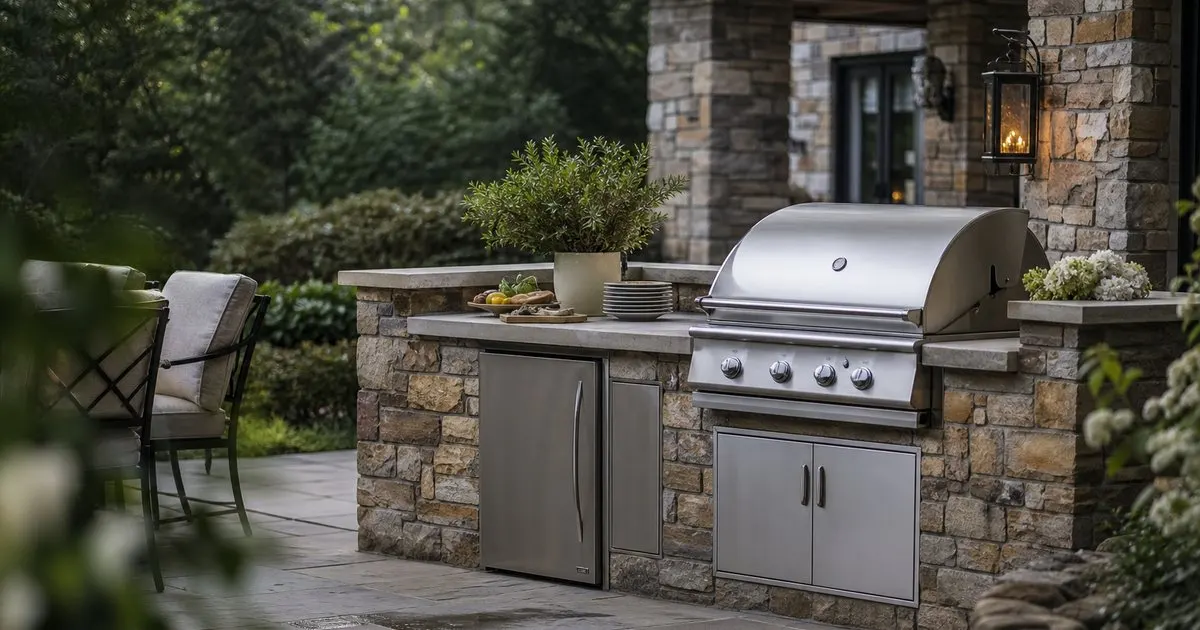
How Do You Plan A Luxury Outdoor Kitchen That Lasts For Years?
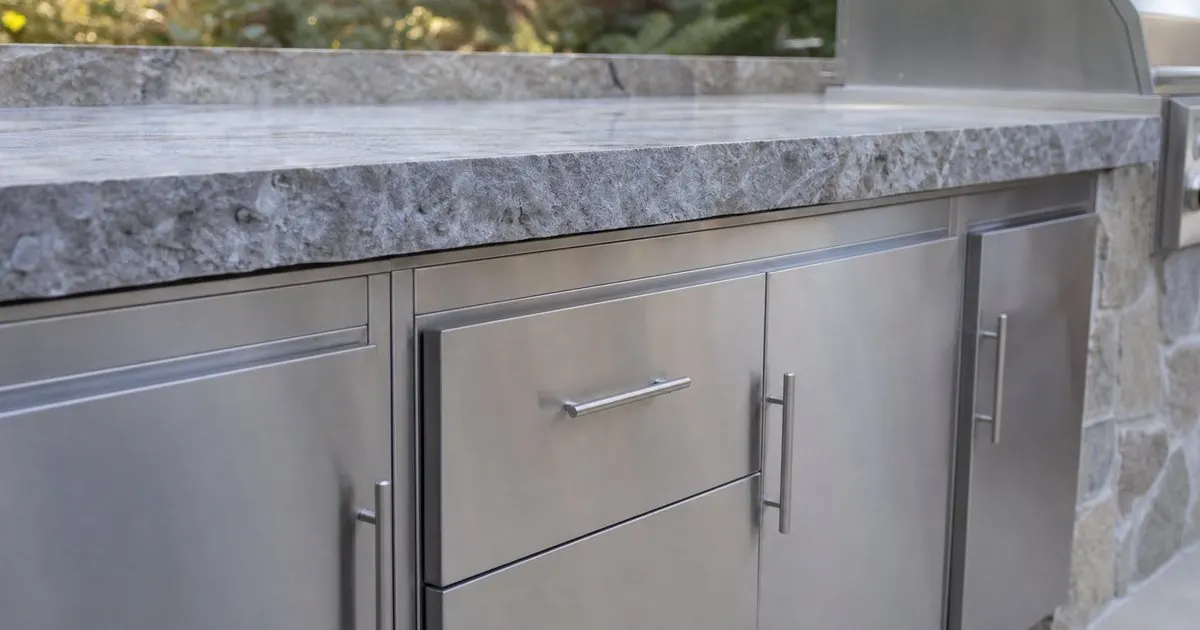
What Materials Truly Survive Years Of Sun, Rain, And Winter Frost?
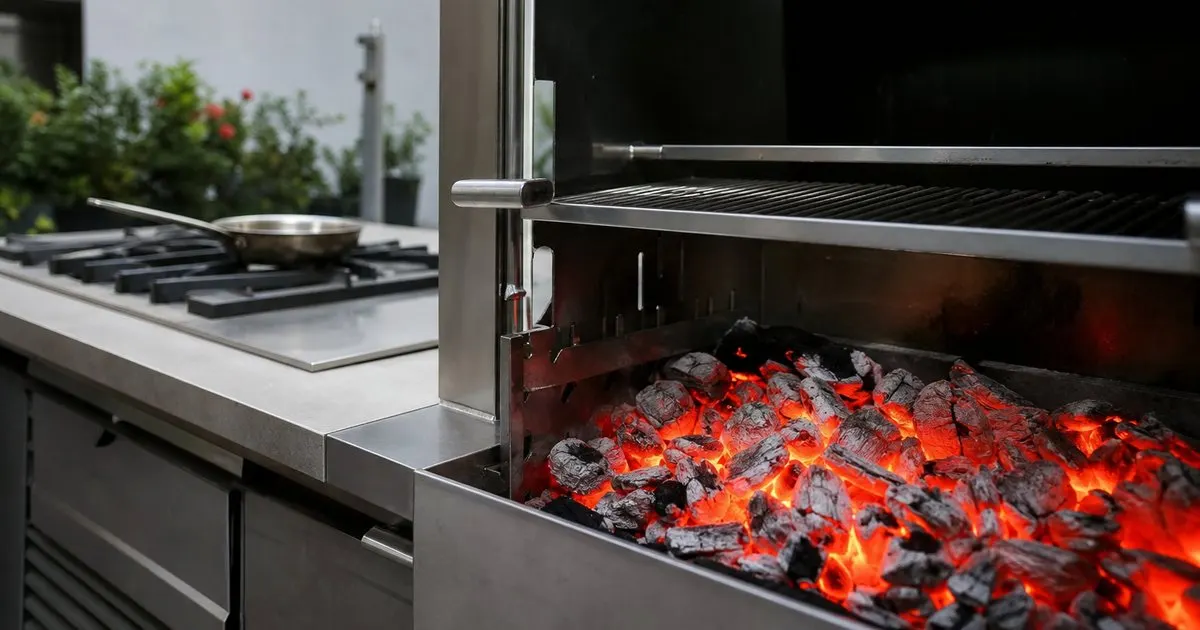
Which Grill Fuel Best Suits A High End Outdoor Cooking Space?
Get the complete luxury outdoor kitchens guide
Our full buying guide, the price guide, and new research as we publish it. One email, no spam, unsubscribe any time.